
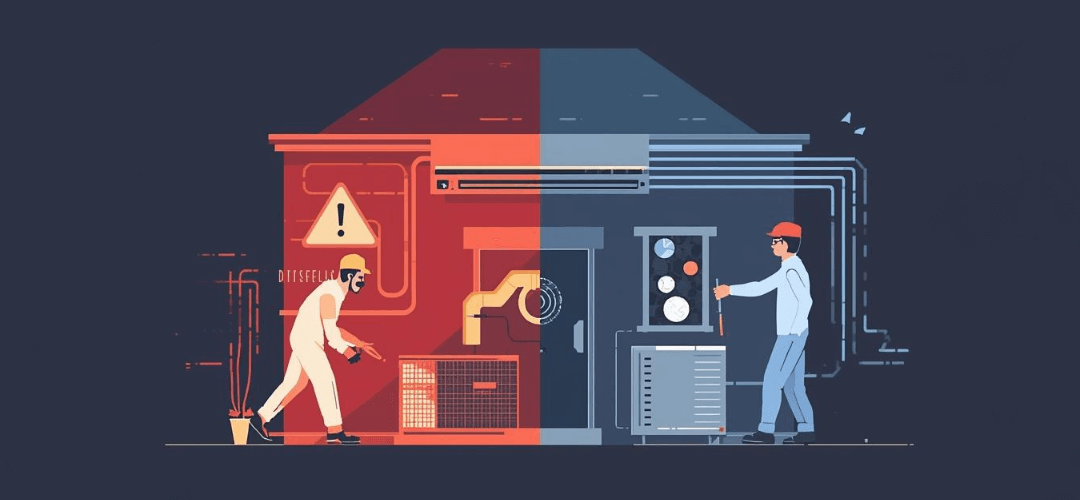
Blocked drains in commercial buildings become compliance risks when wastewater buildup creates unsanitary conditions. Reactive AC services raise commercial costs because breakdowns trigger unplanned visits. Each unplanned visit disrupts schedules and often repeats when airflow, controls, or drainage issues stay unresolved. Planned AC maintenance helps facility and property managers catch faults early, reducing downtime and making service spend more predictable.
CRC Plumbing & Air supports commercial buildings with planned maintenance and responsive AC services when systems fail. If you want to reduce unplanned downtime and make service spend more predictable, start with an inspection: Contact CRC Plumbing & Air.
Why Do Reactive AC Services Cost More in Commercial Buildings?
Reactive AC services cost more because urgent response disrupts operations, and small faults grow into bigger repairs and repeat service calls.
Commercial sites often need access coordination, tenant communication, and defined access windows. Emergency dispatch compresses those steps into hours and leaves little time to coordinate access and schedules. Site managers make faster decisions, schedules shift, and routine work slides.
Repeat service calls also add cost when site staff keep the work focused on restoring operation in the moment. A technician may correct the immediate fault, but the building can still carry the condition that caused it, such as restricted airflow, control issues, or drainage faults. Over time that pattern turns maintenance into a series of urgent visits.
When buildings need a fast diagnosis and repair, CRC can help with AC repair. Facility managers often request HVAC repair when comfort complaints spike or equipment fails during peak demand.
What Does an Unplanned AC Call-Out Cost a Business?
Unplanned call-outs raise total cost because they interrupt operations and compress decision timelines.
Commercial buildings absorb disruption in practical ways. Staff field comfort complaints while managers handle tenant or customer expectations. Site managers may close rooms, move staff, or pause service in affected areas. The building also loses flexibility because managers schedule repairs around the failure, not around operations.
Sudden failures also tend to show up when systems run hardest. Unplanned commercial air conditioning repair often lands during peak demand, when buildings have the least flexibility. High outdoor temperatures, peak occupancy, and extended runtimes increase demand on equipment and controls. When issues hit during high-load periods, response turns urgent and the disruption shows up immediately.
How Do Reactive AC Services Increase Energy and Operating Costs?
Reactive AC services can increase operating costs because the HVAC system runs longer under load when maintenance slips and faults develop.
Coil condition, airflow balance, and static pressure all affect performance. Dirt on coils reduces heat transfer. Restricted airflow forces longer runtimes and makes temperature control harder across a building. Filter condition also affects airflow and static pressure. When maintenance slips, a system can keep running while comfort and control become less consistent.
Controls and condensate drainage also affect reliability. Poor thermostat placement, unstable setpoints, or sensors that no longer reflect real conditions can create excessive cycling or long runtimes. Condensate drain problems, including float switch trips, can trigger nuisance shutoffs and service interruptions.
Planned HVAC servicing gives technicians a chance to inspect these issues before they turn into service calls. CRC supports this approach through AC maintenance.
Reactive vs Planned AC Services: Which Approach Controls Costs Better?
Planned AC services shift work from urgent fixes to scheduled maintenance, which reduces downtime and makes costs easier to manage.
Scheduled visits let property managers set access windows and coordinate with tenants. Technicians can check airflow, coils, electrical connections, controls, and drainage, correct developing issues, and document what keeps driving repeat faults. Maintenance reviews also help identify patterns, such as airflow restrictions in specific zones or recurring drain problems. A structured maintenance schedule can help commercial property managers plan servicing and inspections at consistent intervals.
Planning improves budget control. A planned schedule keeps maintenance predictable and reduces last-minute decisions under pressure.
If your building relies on reactive AC services, an inspection can identify preventable failure points and help you plan maintenance around operating hours.
Common signs that a reactive approach is driving cost and disruption include:
- repeat service calls for the same areas
- equipment that runs longer without stabilizing comfort
- after-hours failures that disrupt tenants or customers
- recurring hot and cold complaints
If you want to move from reactive breakdown response to planned service, start with a commercial HVAC inspection. CRC Plumbing & Air can assess airflow, controls, drainage, and overall system condition, then outline practical next steps to reduce repeat service calls and protect operating hours.
Schedule a commercial HVAC inspection
What Problems Get More Expensive When Businesses Wait for Failure?
Costs often rise when businesses wait for failure. In truth this is actually worse because minor faults can create wider system stress and secondary issues.
A small airflow issue can push equipment to run longer under load. A control problem can increase cycling and wear on contactors and motors. A drainage issue can trigger nuisance shutoffs. None of these guarantee a major failure, but each can drive repeat service calls and increase disruption. When inspections show aging equipment or persistent performance issues, planned AC installation can help teams avoid emergency replacement decisions under pressure. This is often the case when an air conditioning unit shows repeat failures or cannot hold setpoints under load.
Reactive work makes it harder to fix the root cause. Technicians can restore operation quickly, but limited time windows and access constraints can delay deeper checks that reduce recurrence.
When Should a Business Move from Reactive AC Services to Planned Maintenance?
Businesses should consider planned maintenance when they see repeat service calls, uneven comfort, or equipment that runs longer without stabilizing conditions.
Warning signs often appear in operations first. Facility managers see recurring comfort complaints in the same areas, and managers notice after-hours failures that disrupt tenants or customers. Systems struggle during predictable peak periods. Technicians keep getting called back for similar issues.
Planned maintenance gives the building a controlled way to break that cycle through inspection, corrective adjustments, and scheduled follow-up.
How Do Commercial AC Services Support Cost Management?
Commercial AC services support cost management by reducing downtime risk and shifting work from emergency response to scheduled service.
Facility managers gain better control over service timing and access. Buildings also benefit from clearer maintenance records that support budgeting and asset planning. A planned approach also helps reduce after-hours dispatch and repeat call-backs, which lowers disruption for tenants and staff.
How Businesses Reduce AC Service Costs Over Time
Reactive AC services can drive unpredictable service spend through unplanned call-outs and equipment running under strain between failures. Planned maintenance helps keep the HVAC system stable during peak load and reduces repeat emergency work by catching developing faults early.
If your facility sees recurring service calls or unstable comfort, CRC Plumbing & Air can inspect the system, identify preventable failure points, and recommend a practical plan for your building. Contact CRC Plumbing & Air.